HCJB and the broadcasting roots of Reach Beyond
The letters HCJB occupy an important place in the history of Christian broadcasting. Understanding the relationship between the original station and the later international organisation helps keep that history clear.

The beginning in Quito
Reach Beyond’s official history dates HCJB’s first programme in Quito, Ecuador, to Christmas Day 1931. It describes an early broadcast featuring music and messages in English and Spanish, using a modest transmitter built by engineer Eric Williams. The account also describes the practical difficulties of getting the station operating and maintaining it. Reach Beyond’s history.
In January 2014, HCJB Global adopted the name Reach Beyond. Its announcement explains that the new name reflected a broader mission and that the organisation would no longer be named after its inaugural station. This was an organisational name change; it should not be read as proof that every station or local organisation using HCJB changed its name. The 2014 announcement.
A practical starting point
For a church considering radio, the useful lesson is to plan for an operating service rather than an opening ceremony. Our recommendation is to give maintenance and continuity the same attention as the first programme.
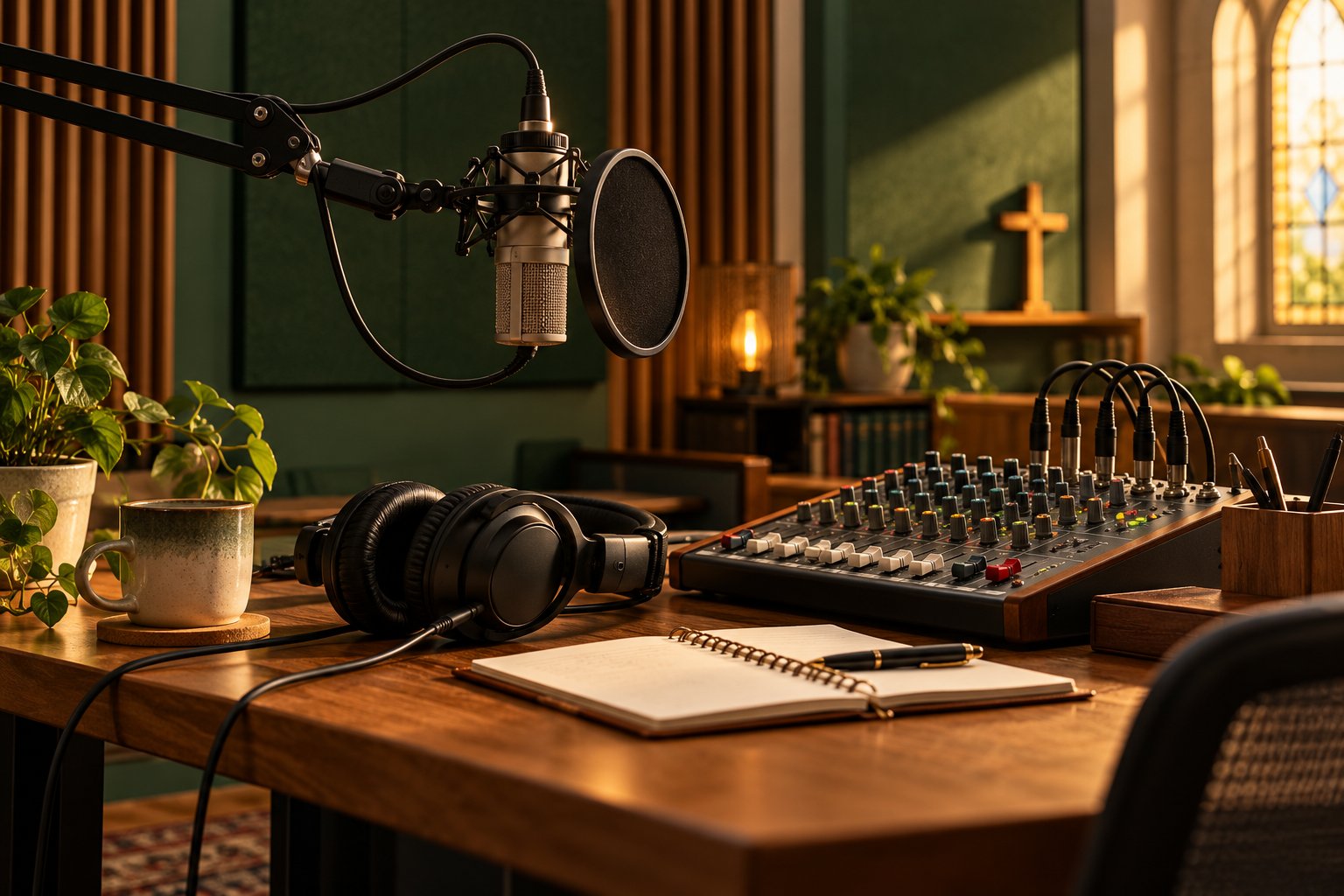
Keep an equipment list, label connections and record the normal operating settings. Decide who can diagnose a silent input, restore a programme source or contact the appropriate technical support. Make the setup understandable to more than one person.
Learn from history without copying its scale
Historical transmission accounts describe particular frequencies, antennas and conditions. They should not be used to promise the same coverage from a modern local installation with a similarly rated transmitter. The intended audience and site need their own assessment.
A sensible pilot might begin with recording and reviewing a complete programme before committing to a larger schedule. Check that the team can repeat the process, store the files safely and keep speech levels consistent. Prepare an alternative programme source for occasions when a live event cannot proceed.
HCJB’s story brings together ambition and the practical work of keeping a station on air. A contemporary church can apply that lesson at its own scale: define the service, prepare the people and then specify the installation. Use our church radio planning guide.